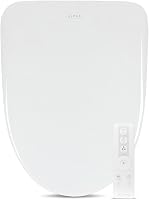
Bidet Toilet Seat Not Working? What to Check
A bidet toilet seat that stops working is usually a supply problem: a closed T-valve, a kinked hose, or a loose fitting. Check water and power first, then the remote and settings, before you assume the seat is broken.
On this page (8 sections)
- Why is my bidet toilet seat not working?
- How do I check the water supply and T-valve?
- Why won't my bidet seat spray water?
- What should I check if the seat has no power?
- Could a worn hose or connector cause the problem?
- Why won't my bidet seat respond to the remote?
- When should you call a plumber or the seat maker?
- Which part should you replace first?
A bidet toilet seat that stops working is usually a water supply or power problem, not a dead seat. Check the T-valve, the hose, the outlet, and the remote in that order, and most faults turn up within a few minutes.
The seat itself is rarely the first thing to fail. Water has to reach it, and a heated seat needs live power.
Work through the checks below before you think about buying a replacement.
Why is my bidet toilet seat not working?
Start with the water supply and the power. A bidet toilet seat not working almost always loses one of those two inputs, and the fault shows up as a weak spray, no spray, or a seat that won't respond at all.
Find the T-valve under the toilet tank. It is the small fitting that splits water between the tank and the seat.
Confirm its lever is open and the main shut-off valve behind the toilet is on.
Next, check the outlet. A heated seat, dryer, or remote needs power.
If the seat has a light or display, confirm it comes on. Then look at the hose running from the T-valve to the seat for kinks or a loose nut.
If all of those look right, the seat's own settings may be the cause. Many models have a child lock or an off mode that blocks the spray.
A quick reset often clears it.
How do I check the water supply and T-valve?
Trace the water from the wall to the seat and confirm every valve is open. The chain is simple: wall valve, toilet fill valve, T-valve, then the seat.
Turn the T-valve lever a quarter turn and listen for water moving. If nothing changes, close the wall valve, unscrew the hose at the seat, and point it into a bucket while you open the T-valve briefly.
Water should flow freely.
A weak or absent flow points to a closed valve, a clogged screen, or a failed T-valve. The SOMDARHK adapter uses a single lever that turns 90 degrees for on and off, which makes this check quick.
Its threads are 7/8 inch by 7/8 inch by 1/2 inch. The 1/2 inch port feeds a handheld sprayer, and a seat hose that is 3/8 inch needs a 1/2 inch to 3/8 inch adapter, which is not included.
A tapered leak washer comes in the box.
Skip it if your seat already has a working valve and the problem sits elsewhere. Keep the lever partly closed if full pressure makes the spray too strong.
How do I know the T-valve has failed?
A T-valve fails when water won't pass through it or it leaks at the threads. Mineral buildup and worn seals are the usual causes.
Close the wall valve and remove the T-valve. Look for grit or scale inside the ports and check the washer for cracks.
A rebuild or a replacement fitting is cheaper than a new seat.
Why won't my bidet seat spray water?
A closed valve, a blocked nozzle, or a loose hose is the usual reason the spray stops. If the T-valve is open and the hose runs clear, the nozzles are the next suspect.
Mineral deposits block the tiny holes and weaken the stream over months. Most seats extend the nozzles for cleaning.
Brush them with a soft toothbrush and a mild descaler, then run a cycle.
Also check the seat's water pressure setting. Some models default to a low level after a power cut.
Raising it in the controls may restore the spray without any repair.
If the spray is weak on one side only, a nozzle is partly clogged. If it is weak everywhere, look back at the supply and the hose before the seat.
What should I check if the seat has no power?
Confirm the outlet works, then check the seat's plug, cord, and reset. A heated bidet seat not working often means the outlet lost power rather than the seat failing.
Bathroom outlets usually have a GFCI button that trips when it senses a fault. Press reset and see if the seat lights up.
If it trips again straight away, stop and call an electrician.
Test the outlet with a lamp or phone charger. Then inspect the seat's cord for damage and make sure the plug sits fully in the socket.
A remote that won't respond can look like a dead seat. Replace the remote batteries and point it directly at the sensor.
Many seats also have basic buttons on the side panel that work without the remote.
Could a worn hose or connector cause the problem?
Yes. A loose nut or a split hose leaks water and drops the pressure at the seat.
Look for drips under the tank and along the hose run.
Tighten any nut that feels loose by hand first, then a quarter turn with a wrench. Don't over-tighten plastic threads.
A braided stainless connector resists bursting better than a plain rubber hose.
The Fluidmaster B1T12 is a 12 inch braided stainless connector with a 3/8 inch female compression thread and a 7/8 inch female ballcock thread. It's rated to 125 psi and carries a 5 year warranty.
Choose it when the hose itself is the weak point. If your seat kit already includes a sound hose and only the T-valve is faulty, replace just the T-valve.
Inspect the hose ends for cracks and the washers for flattening. A wet floor under the toilet is a clear sign to stop and fix the connection.
Should I replace the T-valve or the whole seat?
Replace the T-valve or hose first when water is the problem. Replace the seat only when the controls, heater, and spray all fail after the supply and power checks pass.
A replacement T-valve costs far less than a seat and takes minutes to fit. Test with the new part before you shop for a seat.
Why won't my bidet seat respond to the remote?
Dead batteries and a blocked sensor are the two common causes. Replace the batteries, then wipe the sensor window and point the remote straight at it.
Check for a child lock or a lock icon on the panel. Many seats ignore the remote while locked.
Hold the lock button, or follow the seat's instructions, to release it.
Some remotes pair with the seat and lose the link after a power cut. A reset, usually by unplugging the seat for a minute and plugging it back in, restores the pairing.
If the side panel buttons still work, the seat is fine and the remote is the fault. If neither responds, go back to the power checks.
When should you call a plumber or the seat maker?
Call a plumber when water leaks at the tank or a fitting won't seal. Water near an outlet is the other stop sign.
Electrical faults in a wet room need a qualified electrician, not a DIY fix.
Call the seat maker when the unit has power and water but the controls, heater, or dryer still don't work. A warranty claim may cover a failed part, so keep your receipt.
Don't keep resetting a GFCI that trips repeatedly. That points to a real fault, and ignoring it risks shock or water damage.
If you plan to swap the seat yourself, read how to remove a bidet toilet seat first so the water and power are off safely. Before buying a new one, confirm your bowl with is your toilet compatible with a bidet seat.
Which part should you replace first?
Replace the T-valve or hose before the seat. Those two parts carry the water and are the most common failure points in a bidet seat that stops working.
The SOMDARHK adapter suits a toilet that needs a new shut-off valve with a lever. The Fluidmaster connector fits when the supply hose is worn.
The Holdly tee is a direct replacement for a TOTO THU6234 fitting on Washlet A100, C100, K300, S300E, and S350E models.
Its 7/8 inch ends fit the fill valve inlet and the tank. A thumb nut tightens by hand without tools.
The plastic body resists corrosion, and Holdly offers a 1 year warranty.
If the seat still won't spray after new water parts and a power check, the seat's internal valve or pump is the likely cause. That is the point to contact the maker or compare a replacement, and our bidet seat vs bidet toilet guide helps you decide which way to go.
For a smaller bowl, see the bidet toilet seat for round toilet options.
A bidet toilet seat not working is usually fixable with one cheap part. Check water, power, and the remote in order, and you'll find the fault without replacing a seat that still works.
Frequently asked questions
Why did my bidet seat stop spraying water?
The water supply is the first suspect. Check that the T-valve lever is open and the toilet's shut-off valve is on.
Then look for a kinked hose or a fitting that worked loose at the tank.
Why does my bidet seat only spray cold water?
A heated seat needs power for warm water. Confirm the outlet has power and the seat is switched on.
If a GFCI outlet tripped, reset it and test the seat's heater setting.
Can a blocked nozzle stop the spray?
Yes. Mineral buildup can clog the small nozzle holes and weaken or stop the stream.
Clean the nozzles with a soft brush and a mild descaler, following the seat maker's instructions.
When should I call a plumber instead of fixing it myself?
Call a plumber if water leaks at the tank, a fitting won't seal after tightening, or you see moisture near the outlet. Water and electricity near each other are a real risk, so stop and get help.
Do I need to replace the whole seat if the spray stops?
Not always. Many spray problems trace back to the T-valve, hose, or a clogged nozzle.
Test those parts first, since they are cheaper and easier to swap than the seat itself.
How do I know the seat is getting power?
Check that the plug is fully in the outlet and that any GFCI has not tripped. Try another appliance in the same outlet to confirm it works.
A dead remote battery can also make a working seat seem broken.